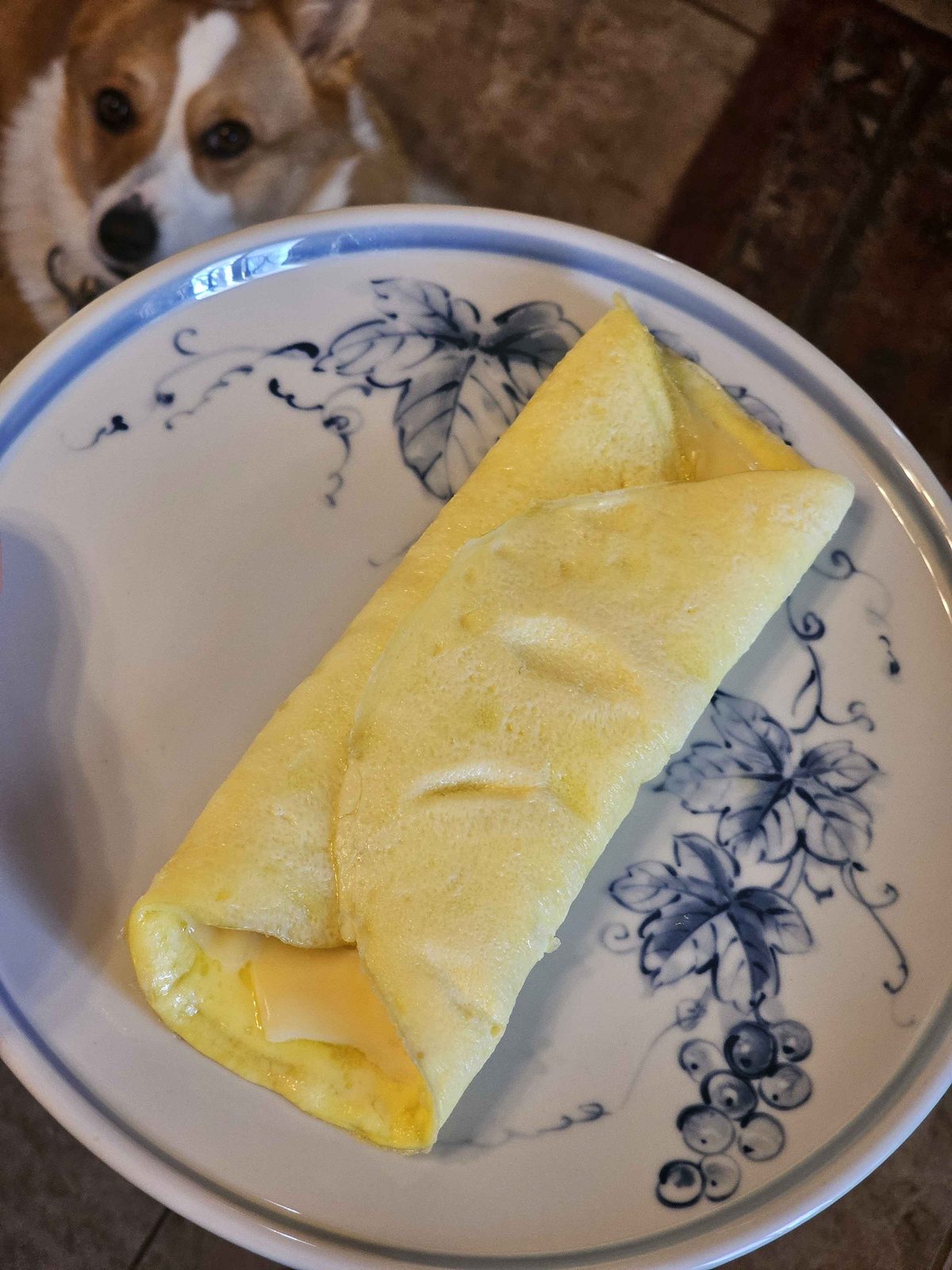
The King's Omelet
This recipe makes mixture for 4-5 omelets that can be used immediately or refrigerated for a week. The result is incredibly tender and airy—almost custard-like—with a mild flavor boosted by a touch of MSG and extra-virgin olive oil. No flipping required; the omelet cooks gently from the bottom while the lid steams the top. Just add your favorite fillings. Perfect plain or lightly garnished.
Ingredients
For the egg mixture
- 12 large eggs
- 1 cup whole milk
- 2 teaspoons salt (no iodine)
- 1 teaspoon MSG (monosodium glutamate)
For each individual omelet
- ¾ cup of the prepared egg mixture
- 1–2 teaspoons extra-virgin olive oil (a 2-second pour; enough to coat the pan generously but not pool excessively)
- Fillings of choice: e.g., a handful of shredded mild cheddar cheese (or any cheese, sautéed vegetables, onions, ham, bacon, etc.—add what you like, but don't overfill so it still folds easily)
Optional garnish (per omelet)
- Freshly ground black pepper
- Snipped fresh chives
Equipment
- Stand mixer
- Fine-mesh strainer
- Measuring cups
- 10-inch non-stick skillet (ceramic preferred)
- Lid that fits the skillet snugly
- Medium spatula (for folding)
- Large wide spatula (5-6 inches wide, for transferring)
Instructions
Prepare the batch mixture
Crack the 12 large eggs into the stand mixer bowl. Beat on high speed (KitchenAid setting 6) for several minutes until very well mixed and slightly frothy.
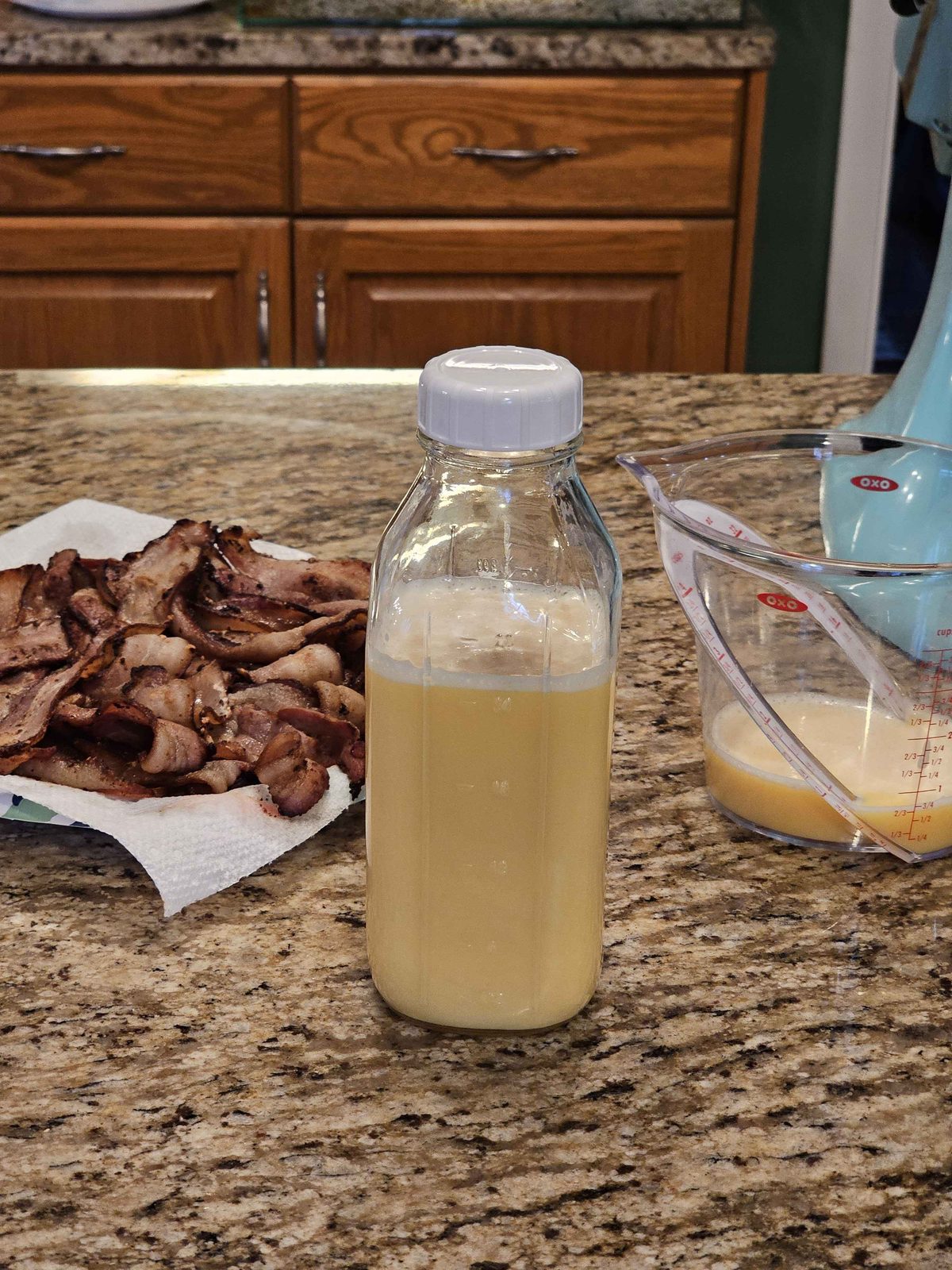
Pour the beaten eggs through a fine-mesh strainer into a large measuring cup. This removes the chalazae (those stringy white bits) and adds extra aeration for fluffiness.
Wipe out the mixer bowl to remove any residue, then pour the strained eggs back in. Add 1 cup whole milk, 2 teaspoons salt, and 1 teaspoon MSG. Mix again on medium-high until completely smooth and uniform.
Sealed in the fridge, the mixture keeps for up to 1 week. Shake or stir gently before each use.
Cook a single omelet
Place a 10-inch non-stick skillet over the lowest heat setting on your stove. Add extra-virgin olive oil—pour for about 2 seconds so it coats the bottom generously with a thin layer (enough for flavor but not so much that it creates a liquid pool on top later).
Measure ¾ cup of the egg mixture and pour it into the pan. It should spread evenly into a fairly thick layer. Immediately cover with the lid.
Cook very gently and watch closely: if small bubbles or air pockets start forming on the surface, slide the pan off the heat for 30–60 seconds to cool slightly, then return it. The trapped heat under the lid gently cooks the top—no flipping needed.
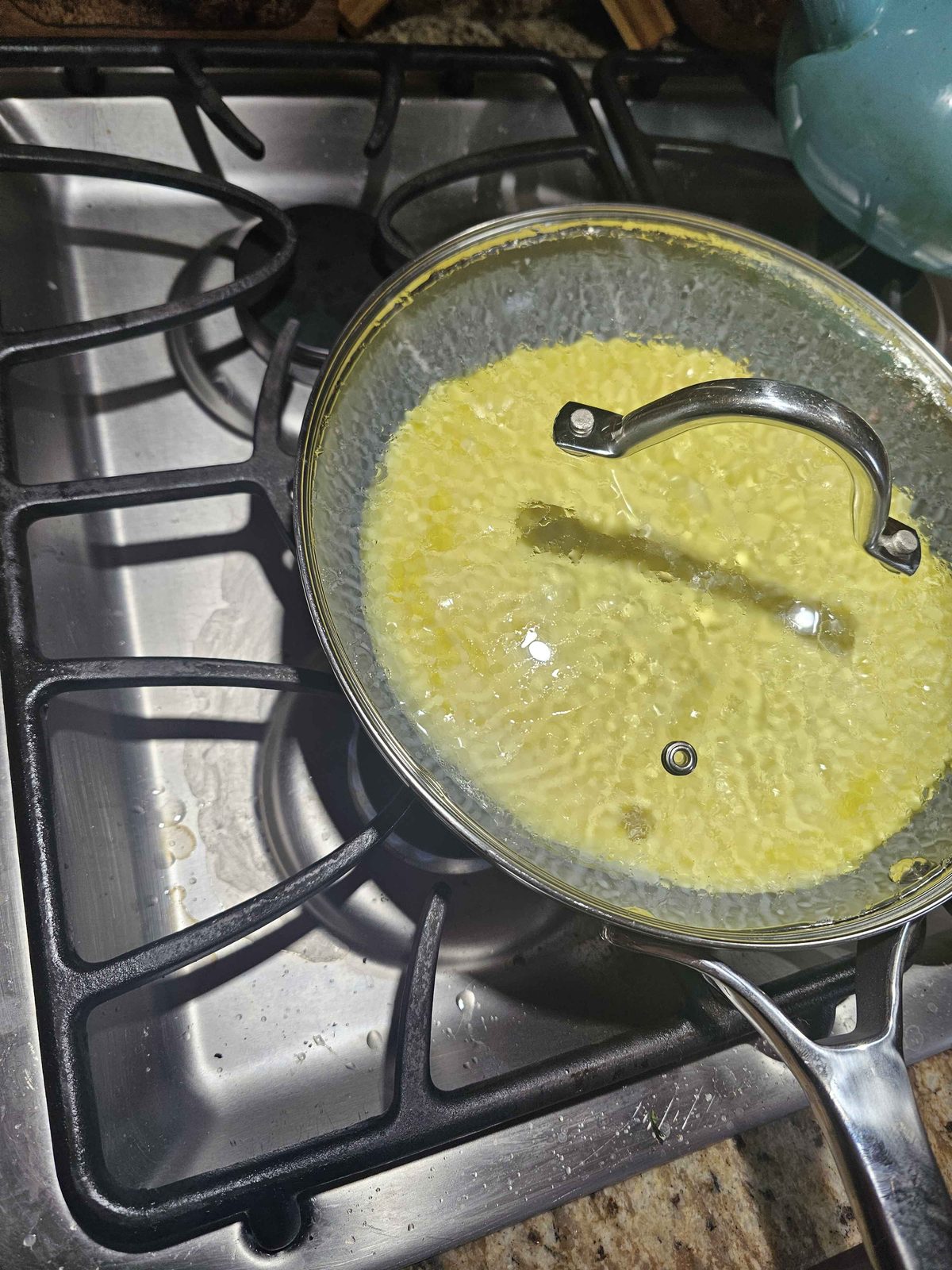
Toward the end, the center sets first. To even out the edges (which often stay slightly wet), rotate the pan every 30–40 seconds so a different section of the edge sits directly over the flame. This helps everything congeal evenly without overcooking the middle.
When the top looks mostly set and the surface has a uniform, smooth, pale golden appearance (no liquid oil pooling if you used the right amount), remove the lid and set it aside on an unused burner to hold heat.
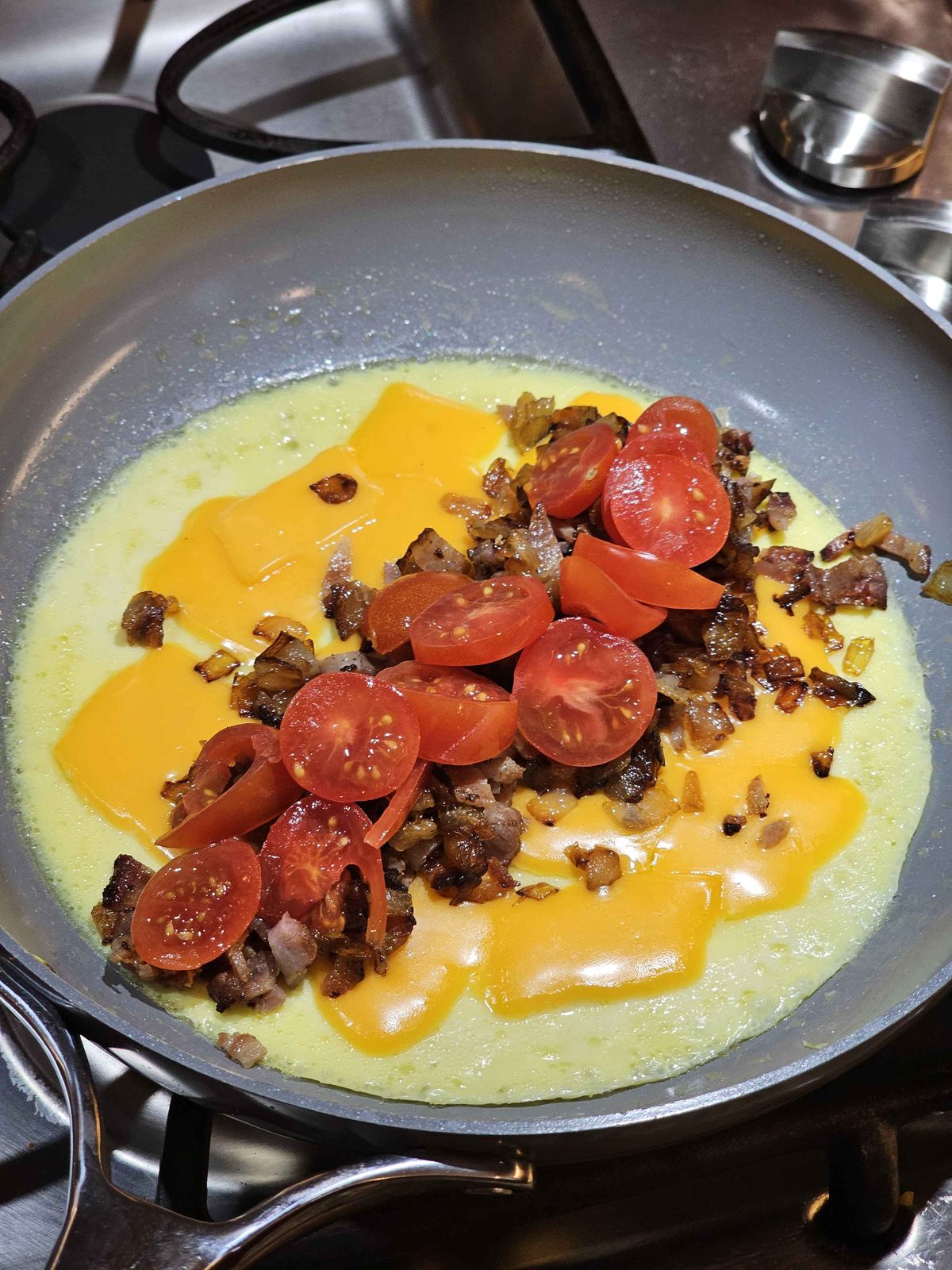
Quickly add your fillings to the center and replace the lid. If the cheese isn't melting, return the pan to low heat briefly until it softens, then remove again.
Using a medium spatula, gently fold one side over toward the center and hold for a few seconds so it seals. Repeat with the other side, creating a neat tri-fold. The melted cheese helps everything stick together.
Slide a large wide spatula under the entire omelet. Tilt the pan slightly and gently drag/roll the omelet onto a plate in one smooth motion so it doesn't tear.
Serve
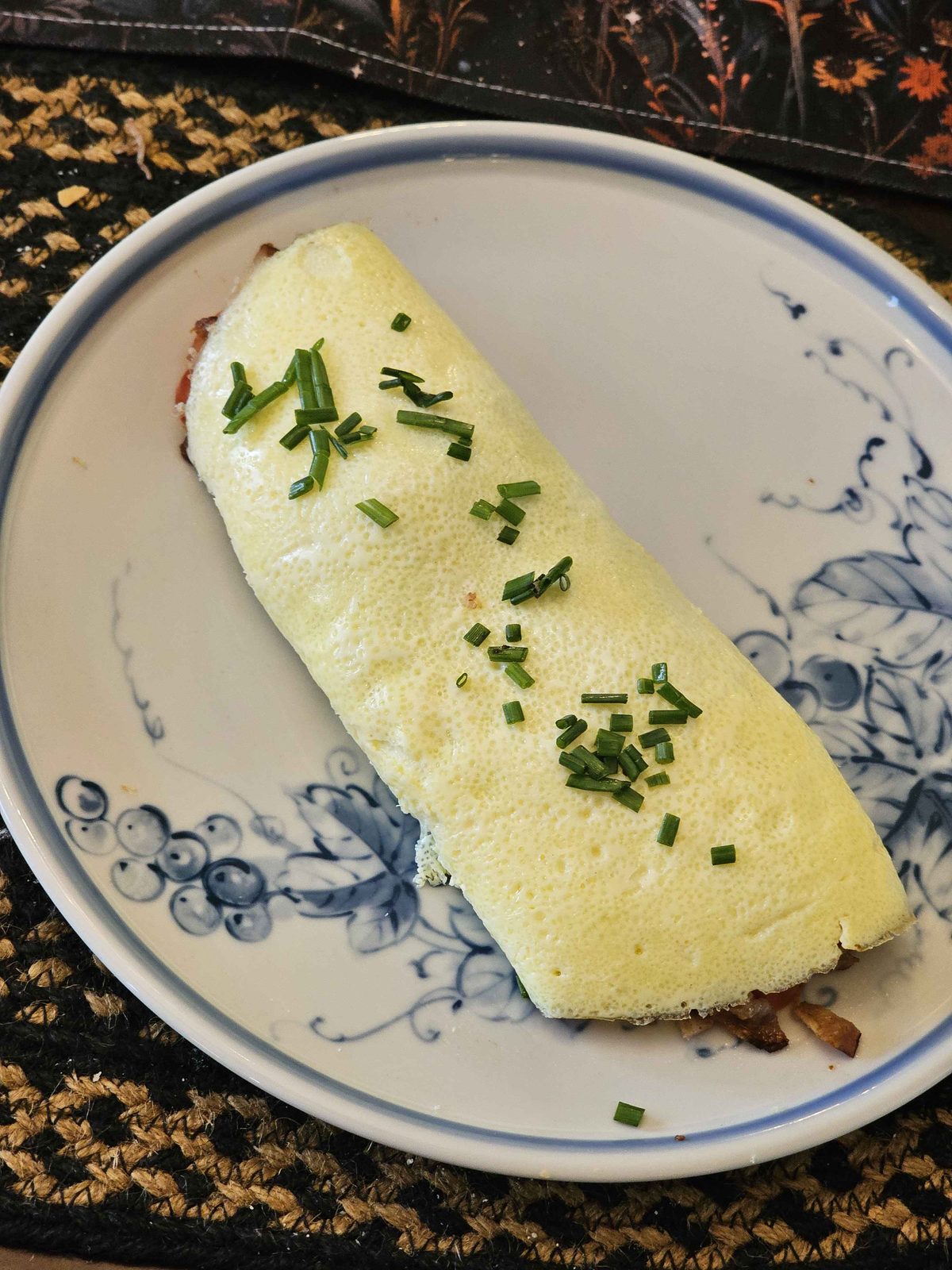
Enjoy plain for maximum fluff and mild flavor, or garnish lightly with black pepper and/or fresh chives if desired. The omelet should be pale golden, ultra-fluffy, and tender—no brown spots.
Tips
- The key is patience and the lowest possible heat—rushing causes browning or toughness.
- Too much oil makes the top look "wet" and tricks you into overcooking.
towards the end you want to move it around a bit so that the edges cook without over cooking the center
5 Feb 2026
you can spread the cheese but the meat should be very narrow in the middle - mine was too spread and i tore the omelet because of it
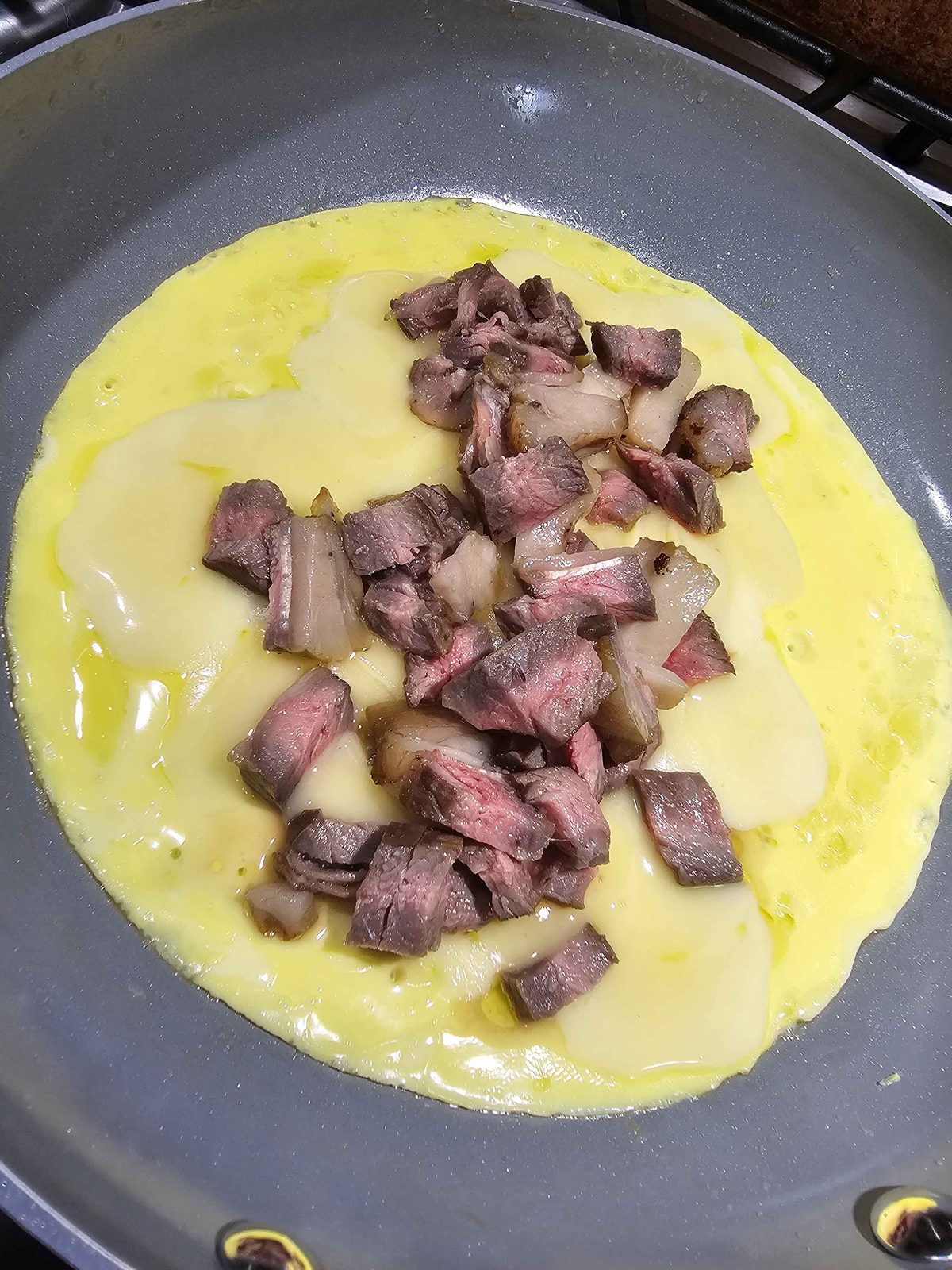
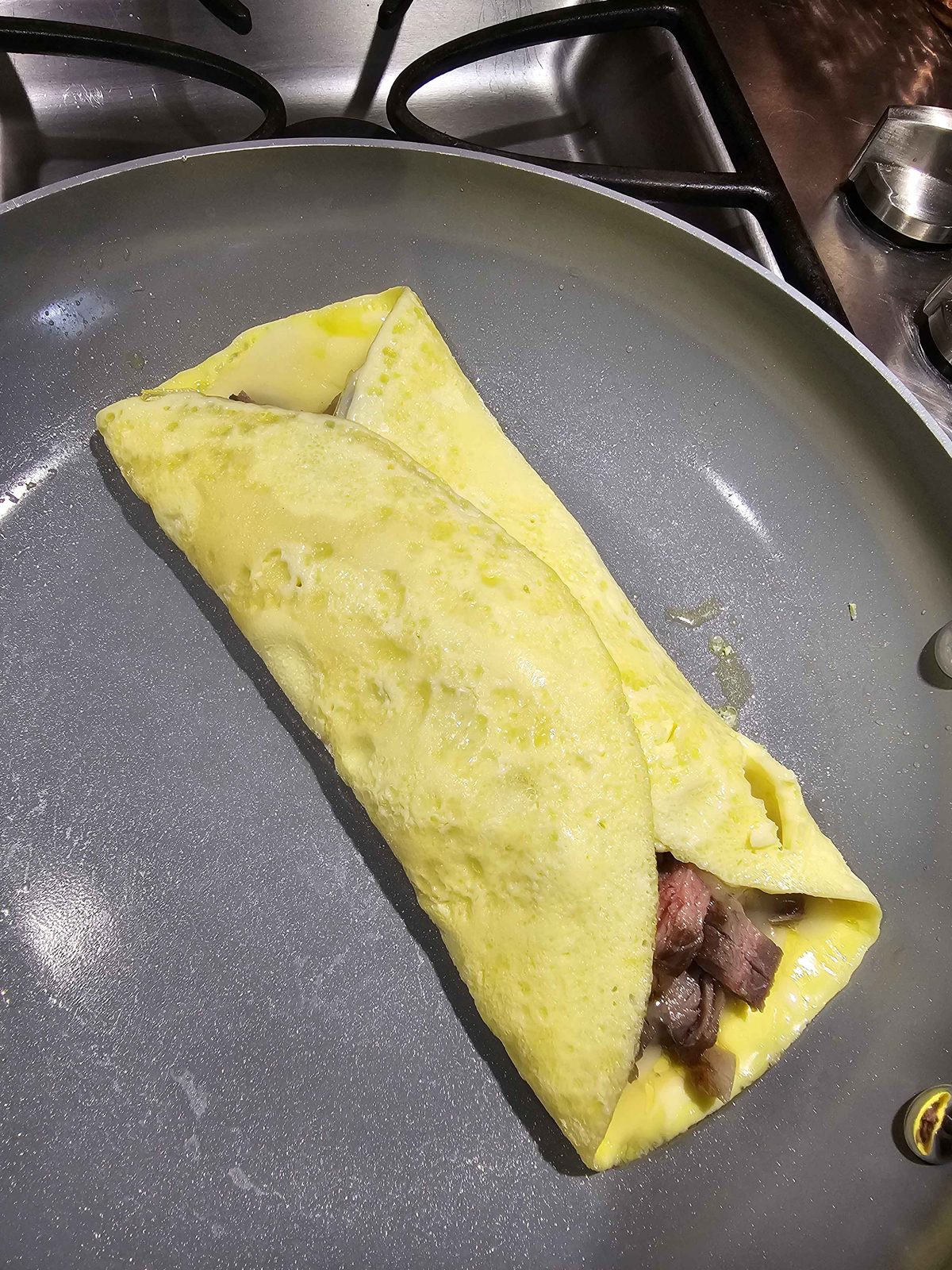
i used muenster cheese. too mild. boring. needs swiss or sharp cheddar
i also learned that you are supposed to flip it over like this before serving
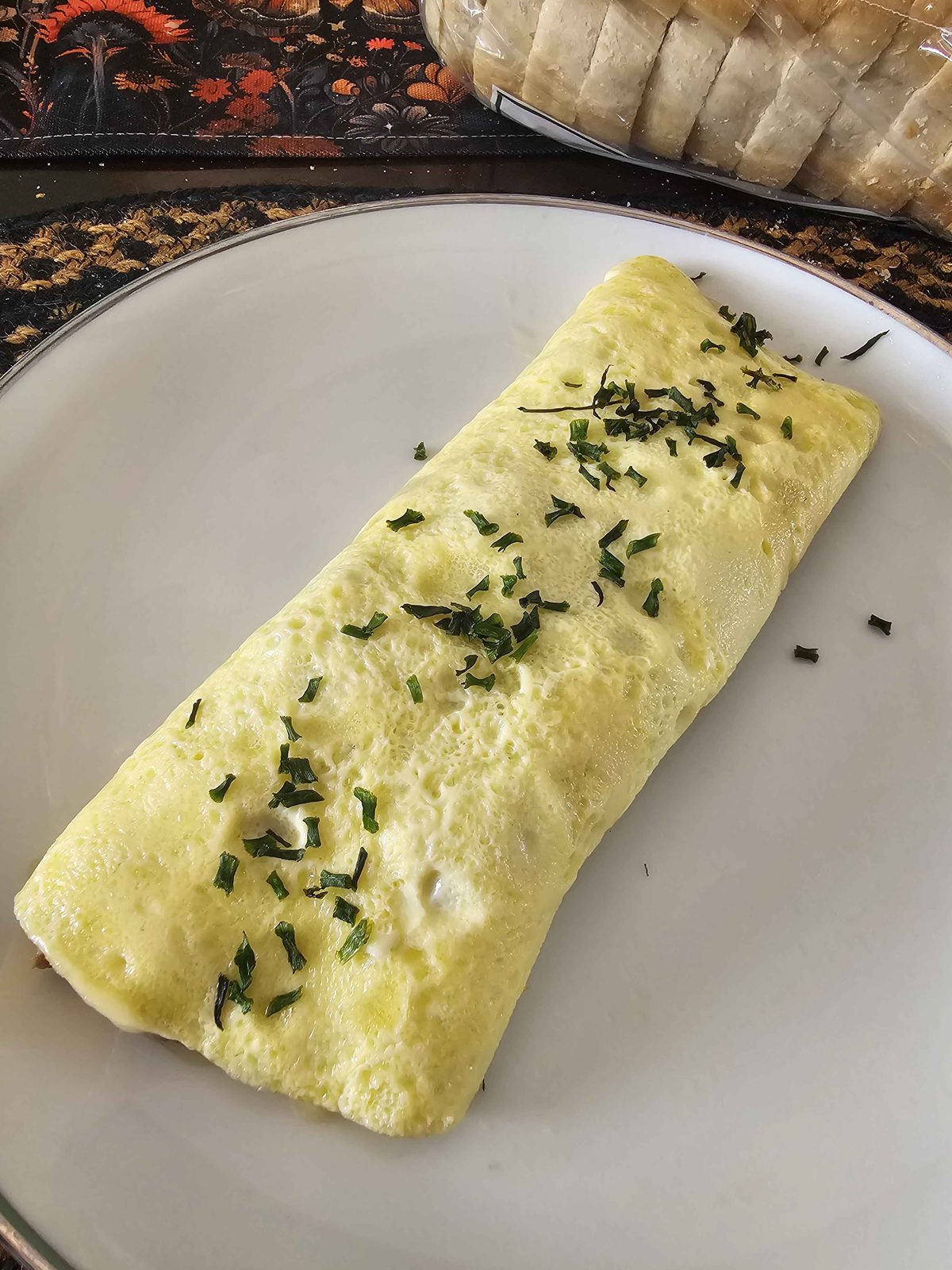

4 minutes over heat before i had to start moving it around
at 6 minutes i took it off the heat, put the toppings on, returned it to heat
just for a moment
then off heat but under the lid
took lid off at 10 min
don't go by time
but this shows you context
11 Feb 2026
the best filling combos
ham+swiss+spinach
bacon+swiss+spinach+tomato
bacon+feta+spinach+tomato
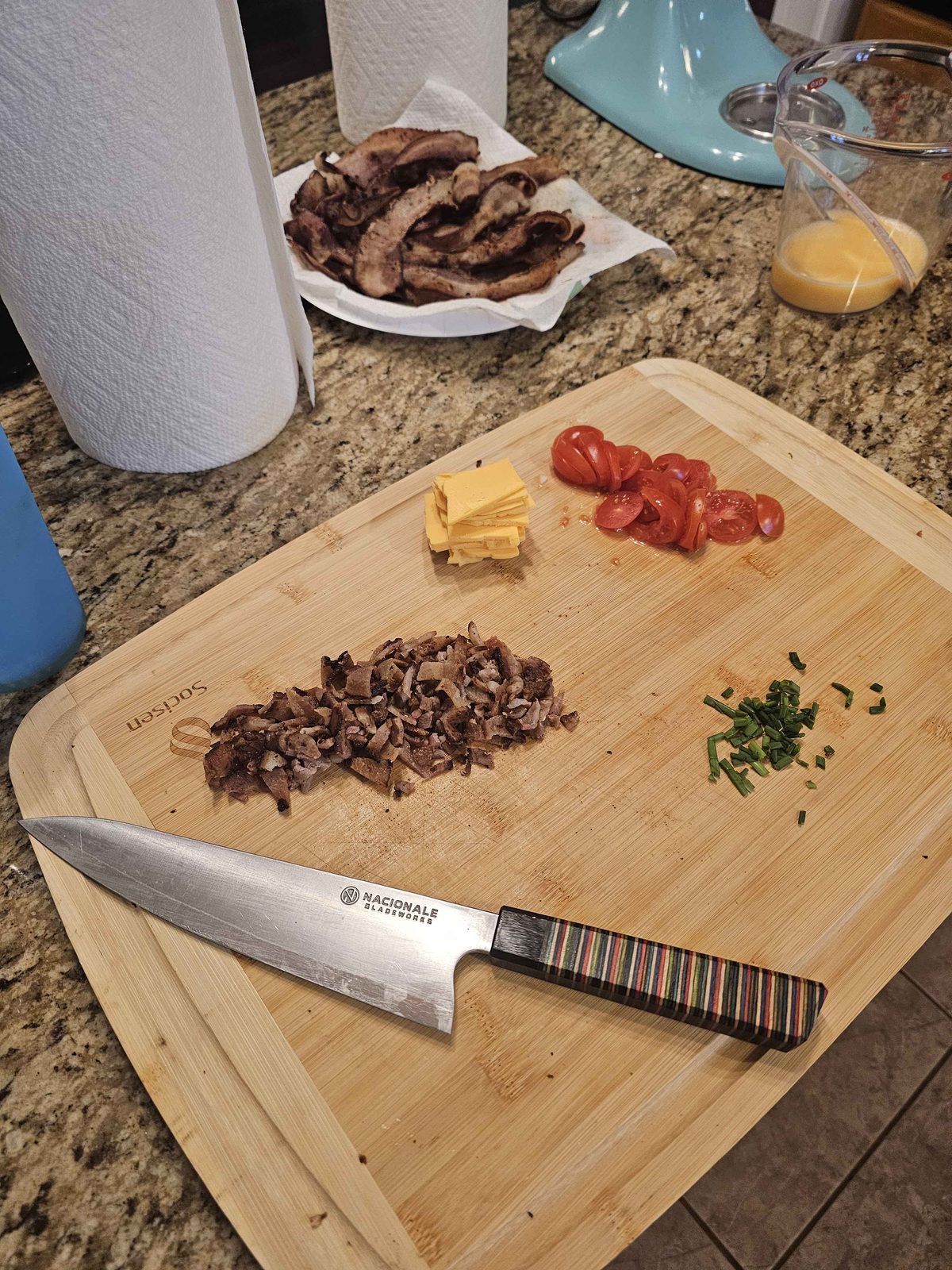
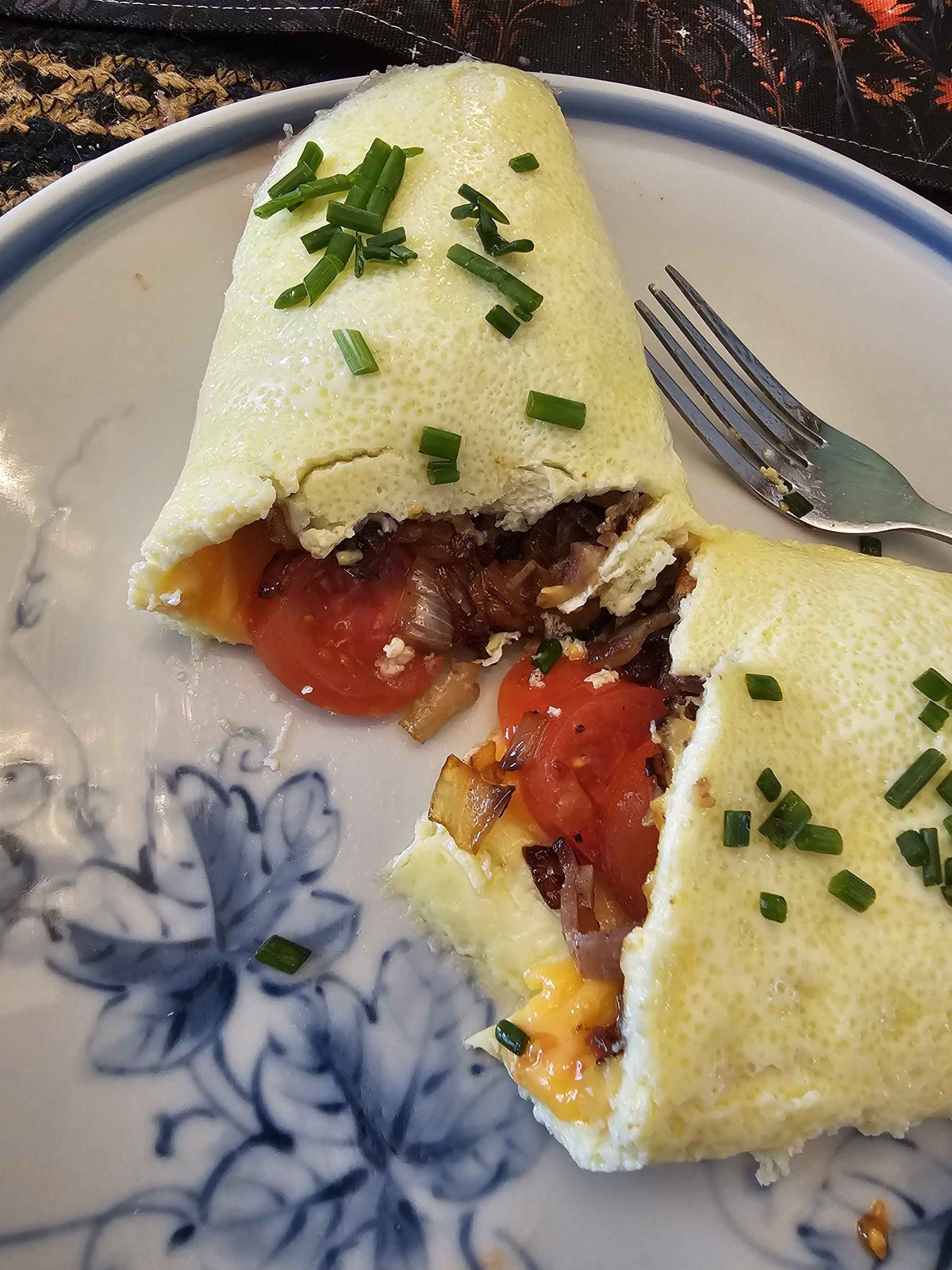
bacon+american+onion+tomato
I will write a full write up on it, but the gist for the Bacon American Onion Tomato is this
3 pieces of bacon per omelet, sliced and diced to bits (4 pieces of bacon will make the omelet explode, but i've done it)
1.5 slices of American cheese (substitute old fashion SHARP cheddar, sometimes i think it's better, other time I think American is better)
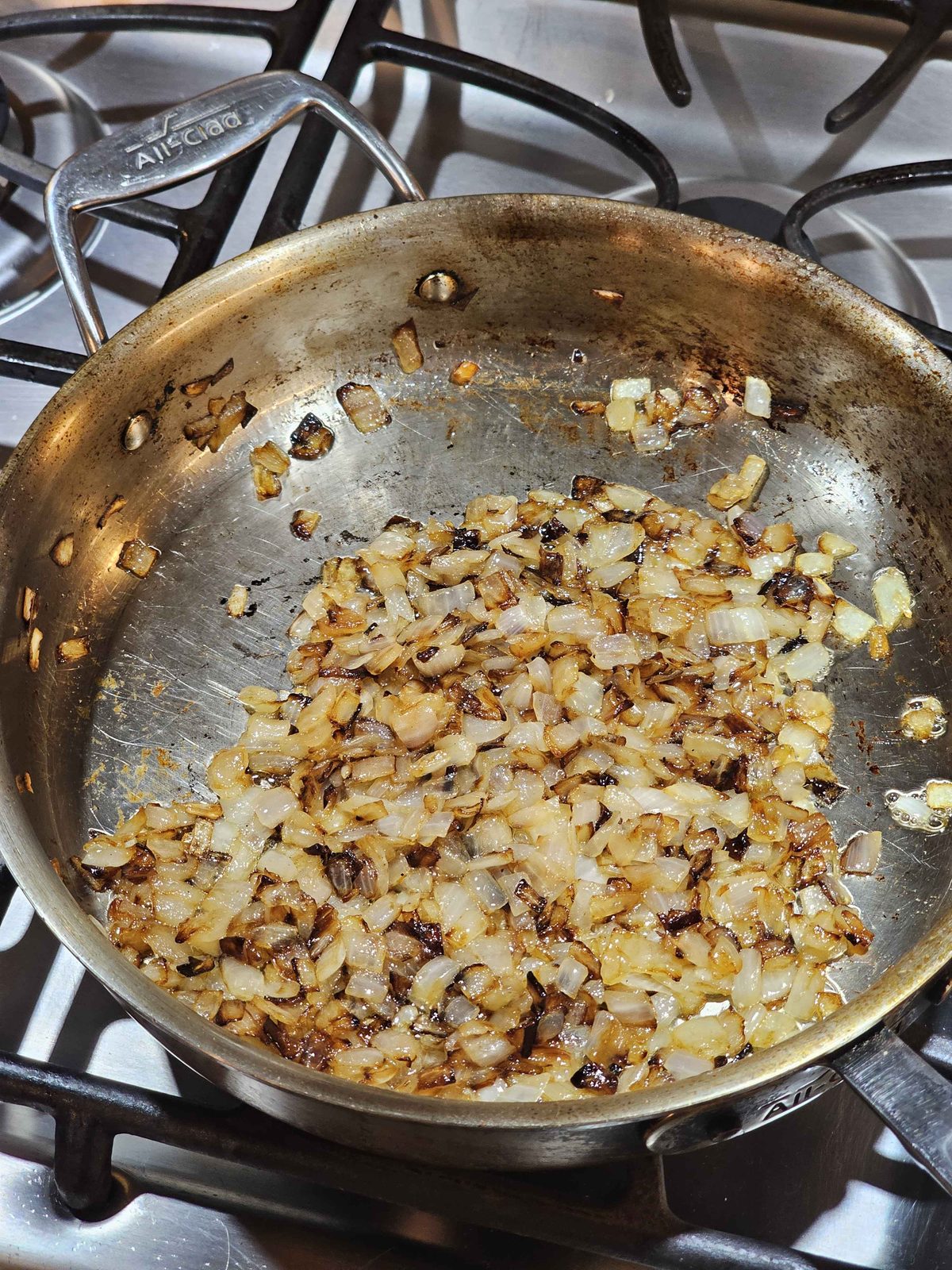
Sweet onion that you cooked down first
The omelet mix above makes enough for 5 omelets, and you'll need TWO FULL ONIONS if you want to prep them all the same. If you only want 2-3 omelets to have onions, just make a single onion.
Cook down two onions with half a stick of butter, or one onion with a quarter stick of butter. Make sure the onions are fresh and juicy, they should be juicing everywhere as you dice them. They cook down so small. Put what you don't use in a sealed container and refrigerate. The cooled onions will condense together into a single block, so you may want to pre-portion them into separate small sealed containers before refrigerating them.
I used all of my onion so I think tomorrow I will go with the feta spinach option
22 Apr 2026
sloppy joe & cheddar omelet. ridiculously good.
and a tip i forgot to put in the original recipe - each omelet is ¾ cup. if you get an uneven amount of mix to complete four or five whole omelets, you can either make them a little bit bigger or, what i like to do, is add an oz or two of milk to make it even. if you add 2oz at the very beginning, it is a negligible change across the entire batch vs doing it at the very end.

24 Apr 2026
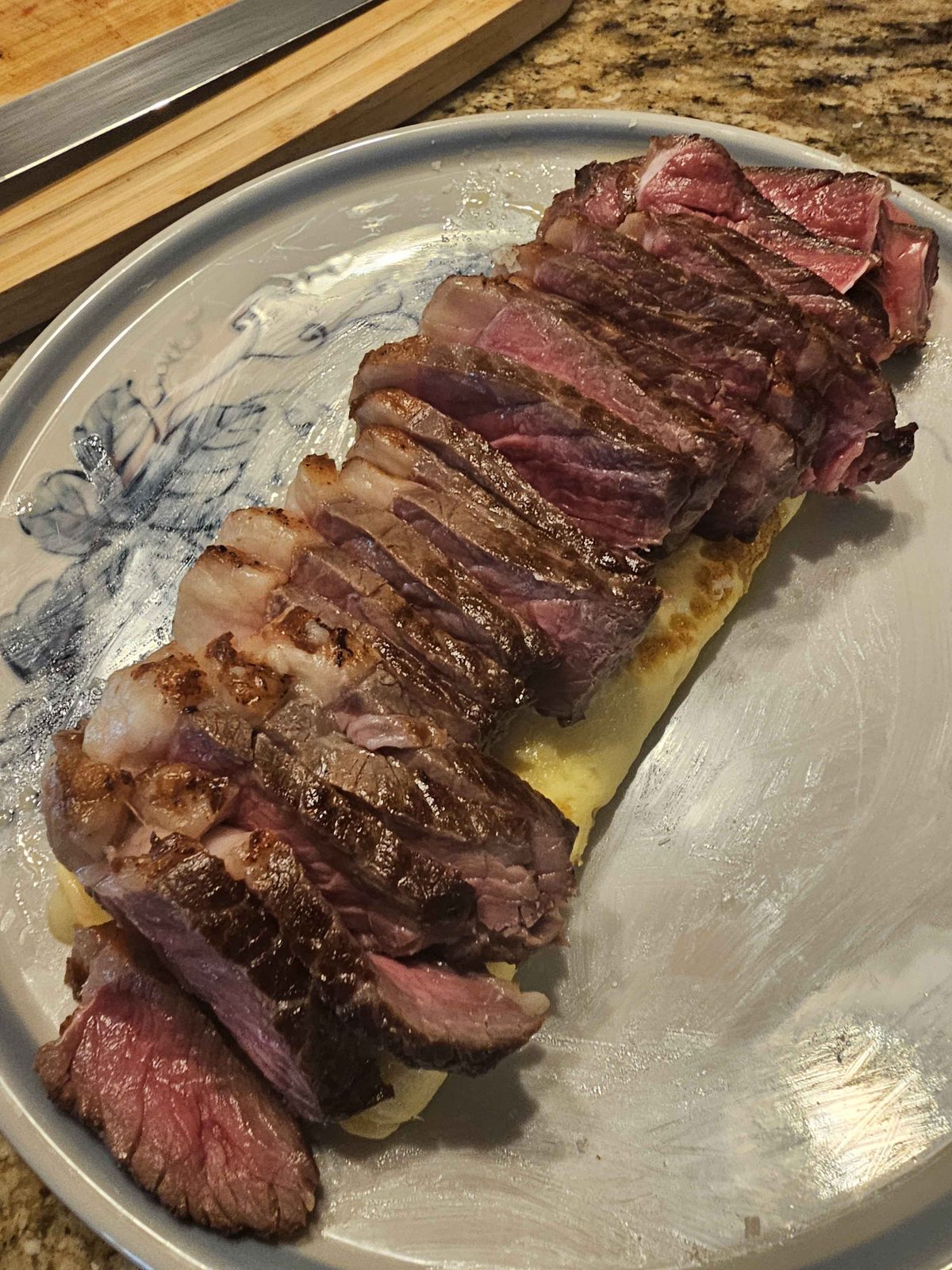
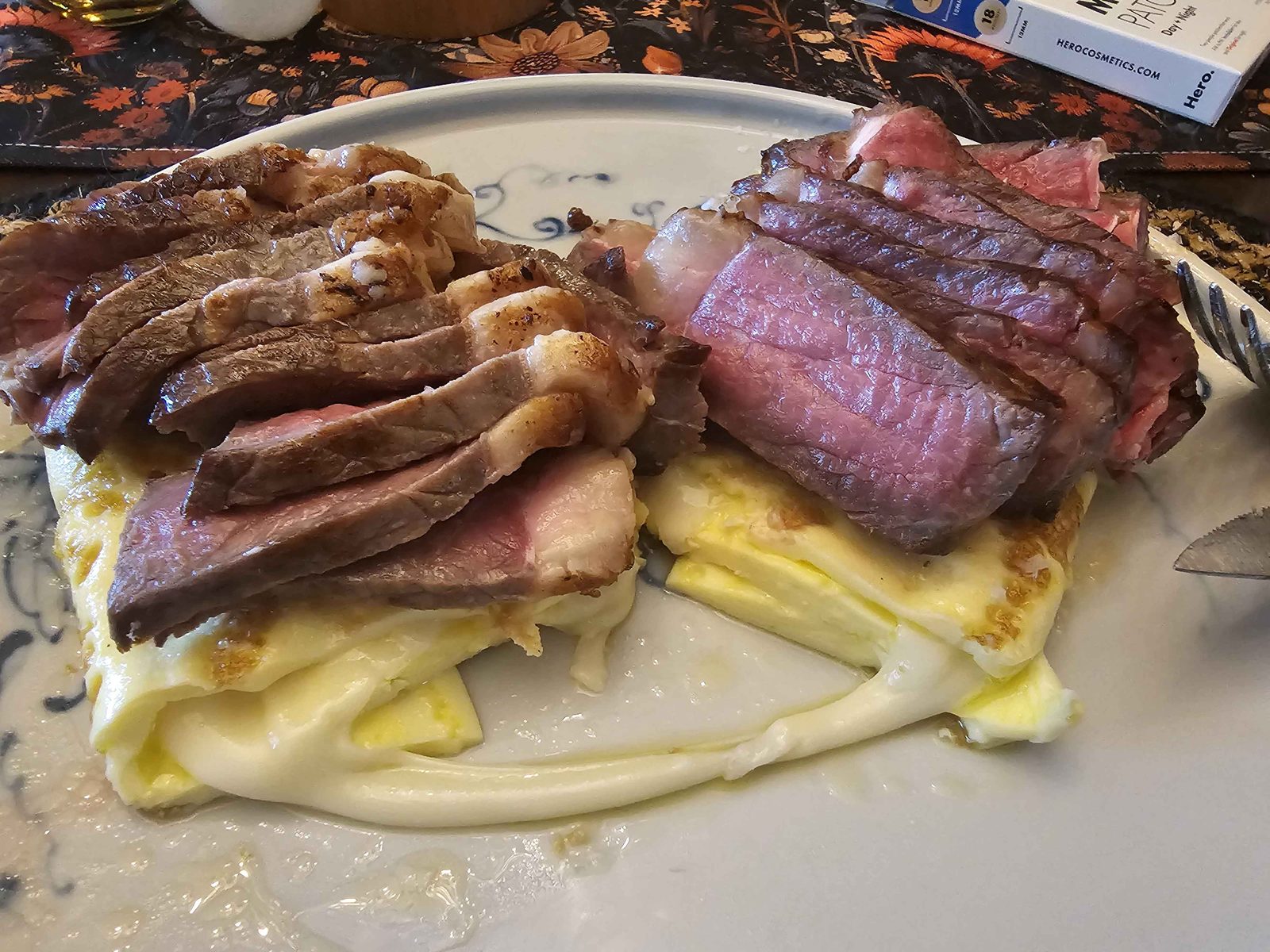
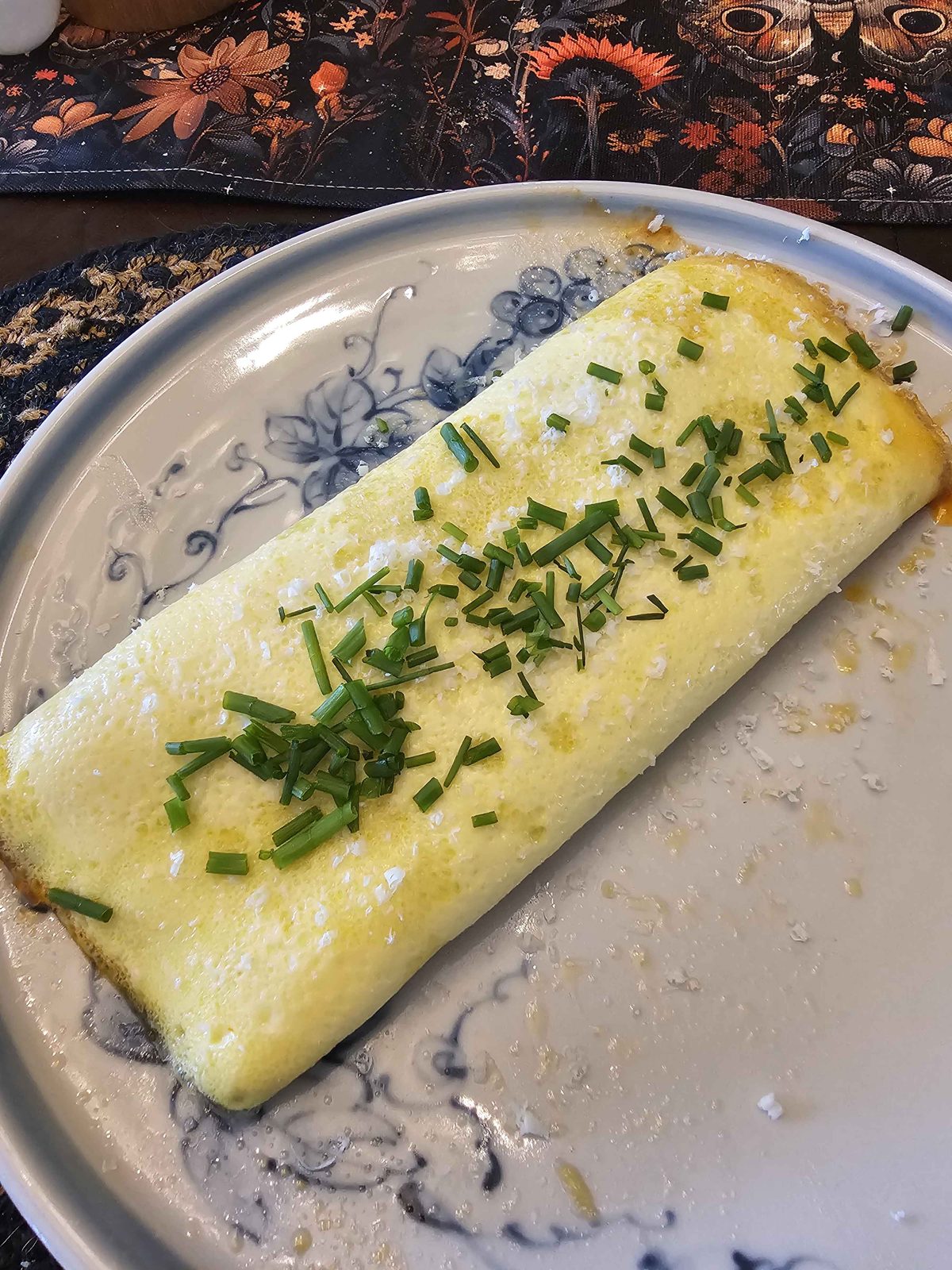
steak and swiss