Authentic Carbonara from Rome
Serves 3
This is an authentic and delicious carbonara that I have pieced together through Roman sources. See video in comments below.
Ingredients
- 250 g imported Italian pasta (Rustichella d’Abruzzo preferred): bucatini, spaghetti, rigatoni, or mezzi rigatoni only—never egg noodles
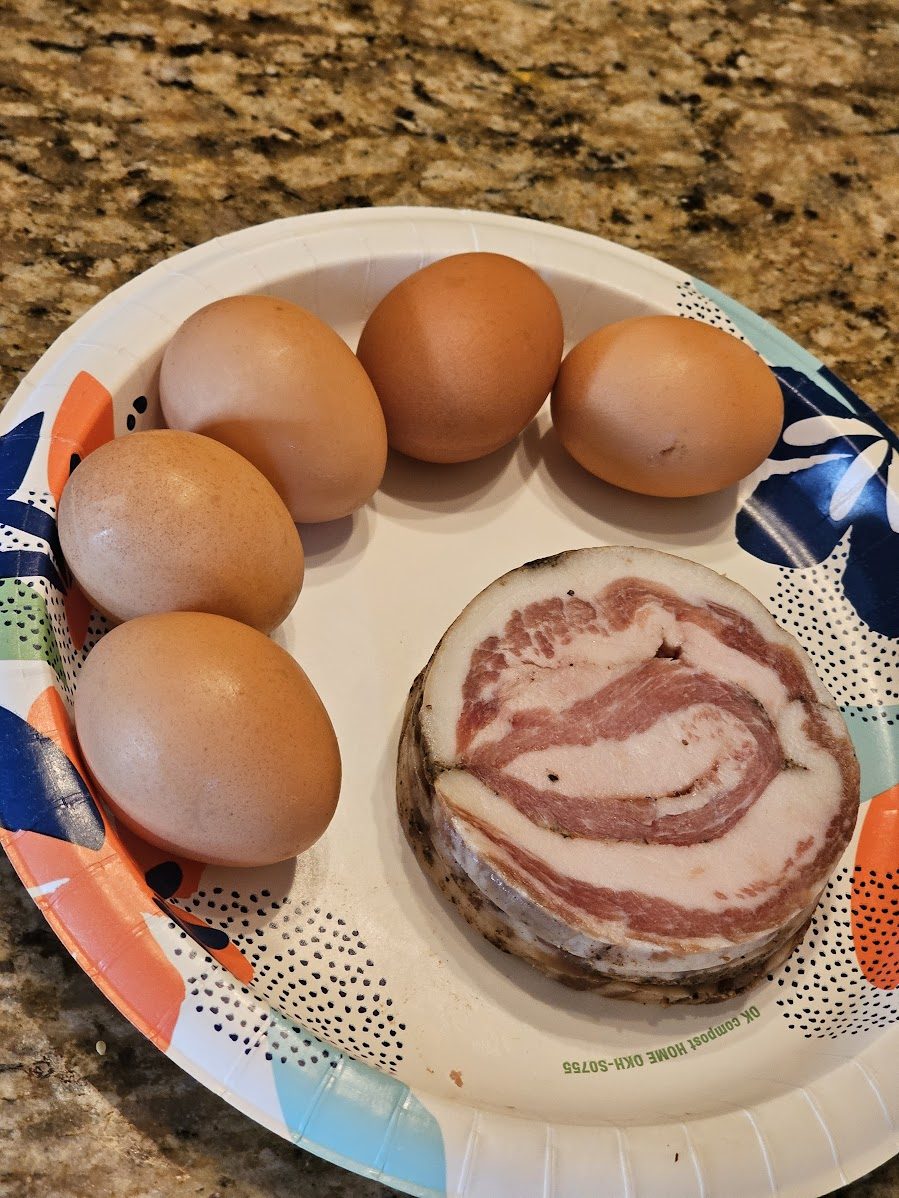
- 8 oz (½ lb) guanciale (ask the Italian market to slice it thick for carbonara)
- 5 large egg yolks (whites and shells discarded)
- 1 cup freshly grated Pecorino Romano (for the sauce)
- ½ cup freshly grated younger, milder Parmesan (not Parmigiano Reggiano)
- Freshly cracked black pepper (small amount for sauce + more for finishing)
- 1 tablespoon non-iodized salt (kosher or sea salt) for pasta water
- Imported Parmigiano Reggiano for finishing
Step-by-Step Instructions
1. Start the water
Put 2–3 quarts water in your pasta pot, add 1 tablespoon salt, and bring to a rolling boil over high heat.
2. Prep the guanciale
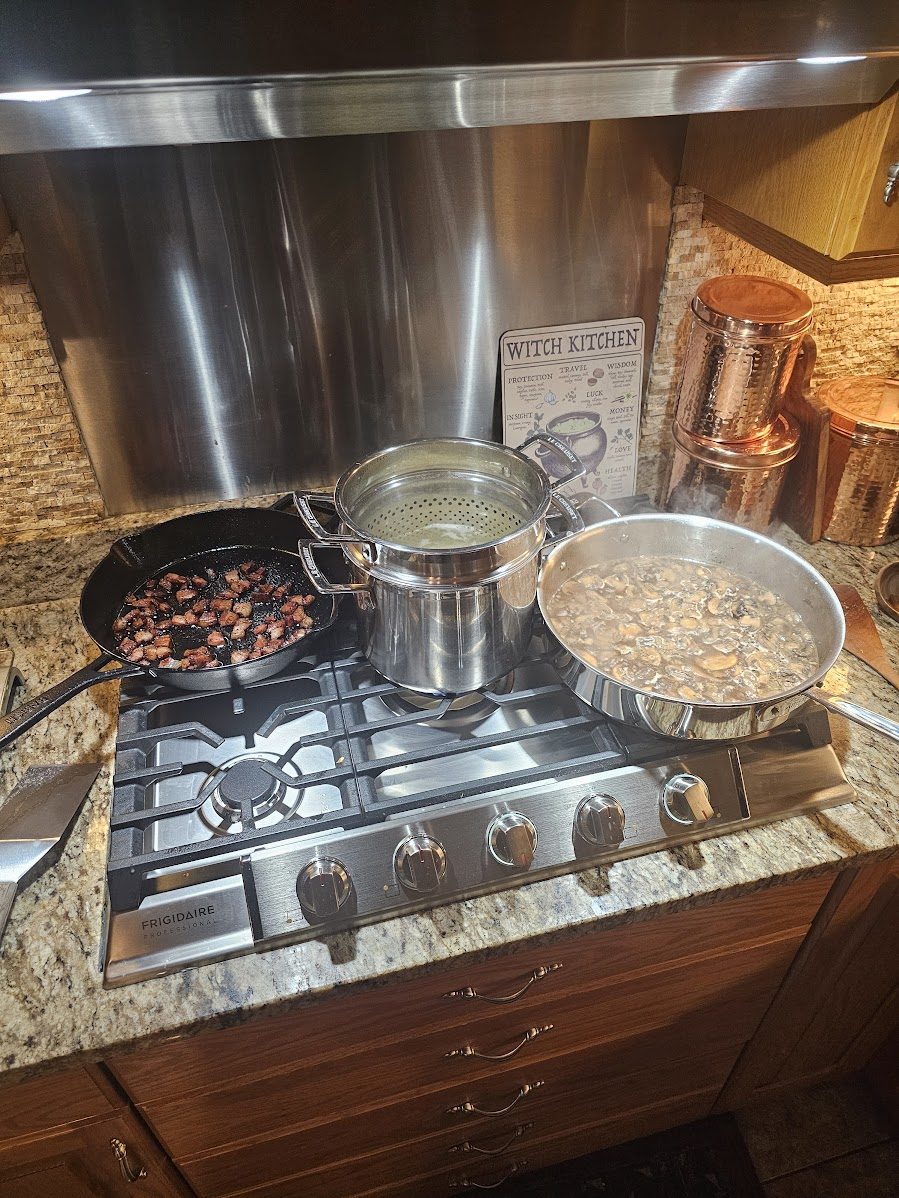
Cube the 8 oz guanciale into roughly ½-inch pieces. Place cubes in a cold cast-iron skillet. Turn heat to medium-low. Cook, turning pieces occasionally, until fat is rendered, edges are golden and sizzling, but the interior is still tender—not hard or burnt. This takes 12–18 minutes depending on your stove. Adjust heat down if it’s browning too fast. When done, remove skillet from heat and let guanciale rest at room temperature.
3. Make the egg-cheese base (do this while guanciale is cooking)
In the 2-quart saucier (off heat, on the counter), crack and separate 5 egg yolks using the eggshell method. Whisk vigorously with a metal fork until smooth. Add 1 cup freshly grated Pecorino Romano + ½ cup freshly grated younger Parmesan. Add a few good cracks of black pepper. Mix until it looks like wet sand. Do not heat yet.
4. Emulsify the sauce
Pour roughly half the rendered guanciale fat from the skillet into the saucier. Whisk immediately and rapidly so the hot fat warms the eggs without scrambling them.
5. Timing the pasta
Do not drop the pasta until the guanciale and sauce have no more than 12 minutes left. Cook pasta all the way through—soft but not mushy. You want it to marry perfectly with the sauce; al dente does not work here.
6. Gentle warming of the sauce
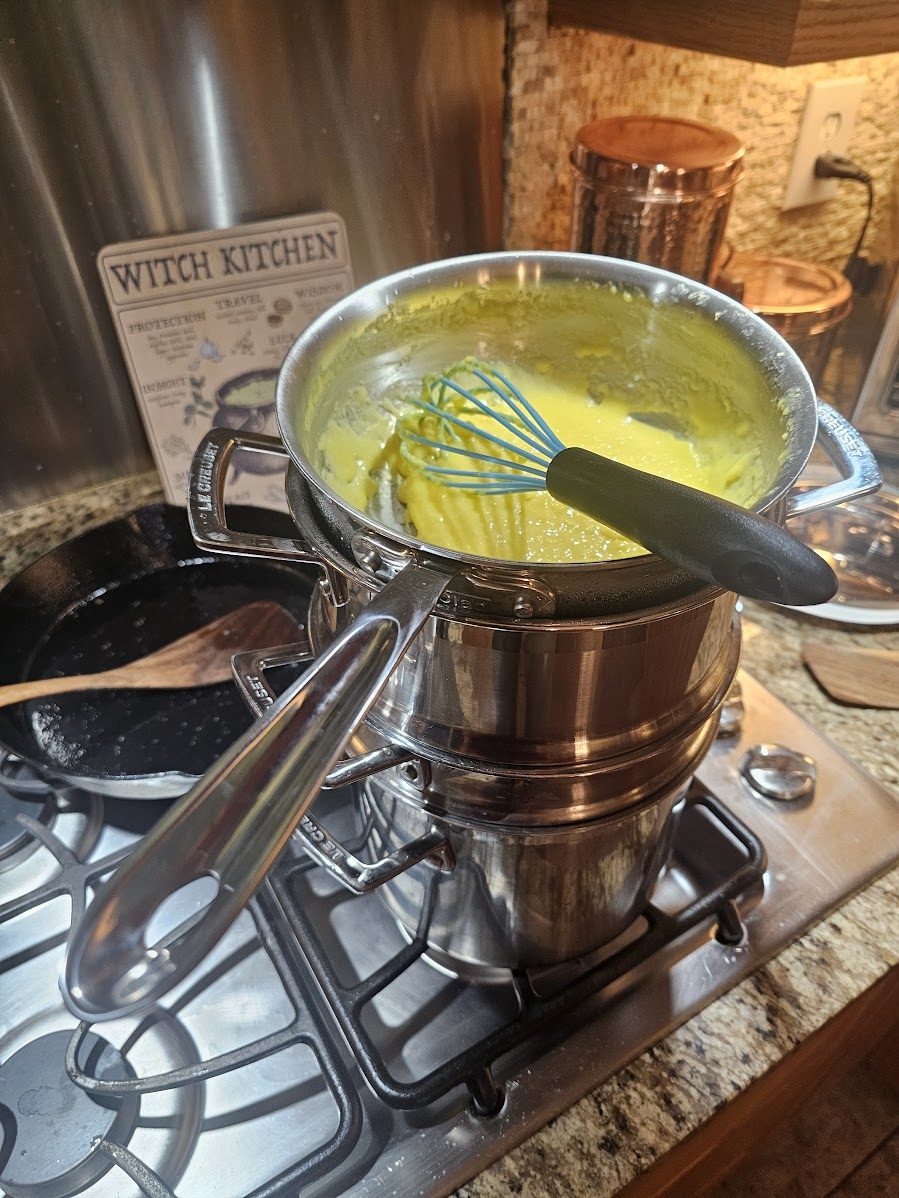
Once the fat is incorporated, occasionally hold the saucier over the boiling pasta pot (using the steam) and whisk vigorously for 10–15 seconds at a time. Never leave it on the heat continuously. Remove immediately if it starts to look thicker than heavy cream.
7. Finish the pasta
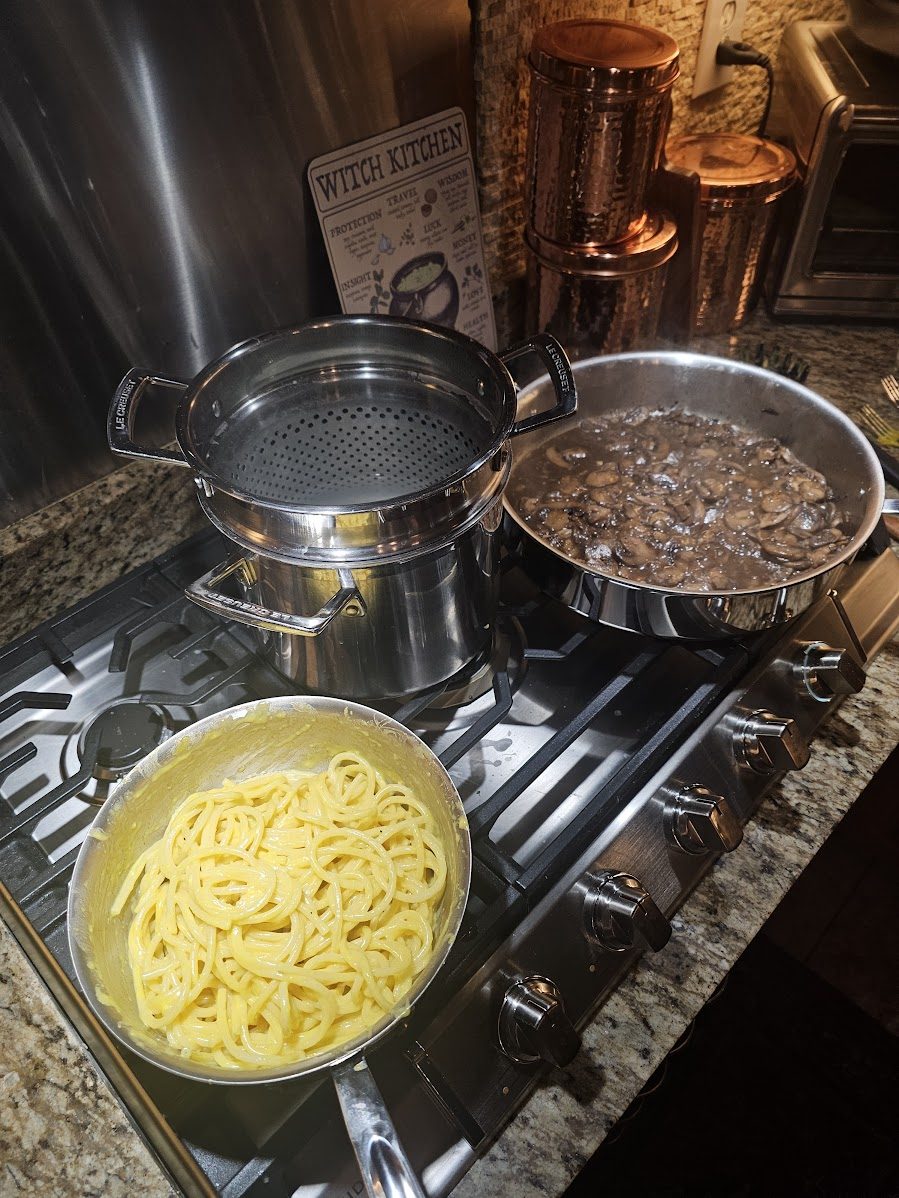
When pasta is fully cooked, turn off the burner. Use the built-in strainer (or carefully remove 1 ladle of pasta water first). Let the pasta sit in the strainer for 30–45 seconds so it cools slightly—this prevents shocking the egg sauce.
Pour the slightly cooled ladle of pasta water into the saucier and whisk vigorously until silky.
Add the drained pasta to the saucier. Toss gently but thoroughly with tongs or a fork until every strand is coated. If the sauce tightens up too much, place the saucier back over the hot pasta pot (heat off, steam only) for a few seconds while tossing.
8. Plate and finish
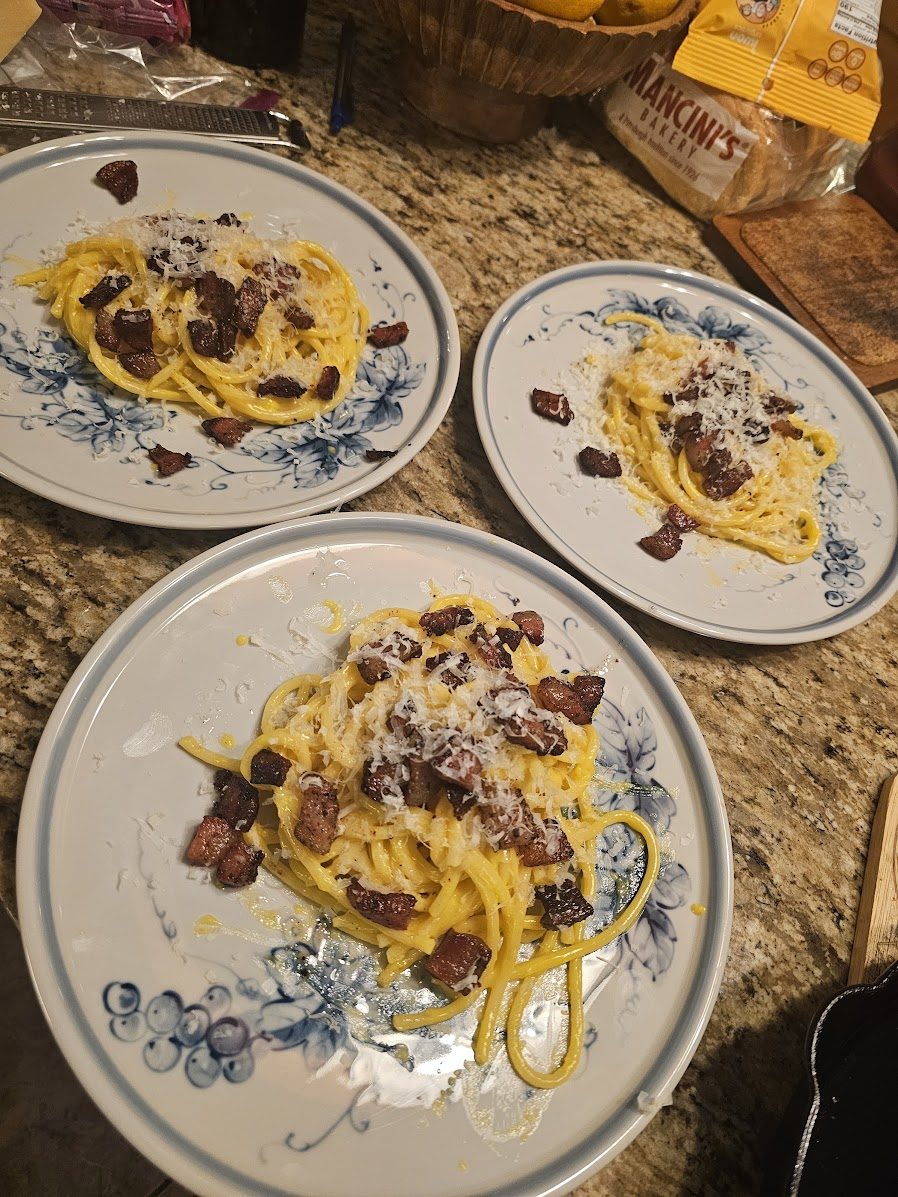
Twirl each portion into a neat nest in warmed bowls. Scatter the room-temperature guanciale pieces on top. Generously grate more Pecorino Romano and aged Parmigiano Reggiano over everything. Finish with a few extra cracks of black pepper.
Serve immediately. This dish does not reheat or store well.
Tips
- Temperature is everything. The sauce should never exceed ~160–170 °F or you get scrambled eggs instead of carbonara.
- Guanciale should be tender-chewy, not bacon-crispy. Low-and-slow in cast iron is the secret.
- Freshly grate all cheese yourself. Pre-shredded has anti-caking agents that ruin the emulsion.
- Sauce cheese = cheaper younger Parmesan + Pecorino. Finishing cheese = fancy aged Parmigiano Reggiano on top.
- If the sauce ever looks too thick after tossing, a tiny splash more pasta water (cooled) brought back over steam fixes it instantly.
I highly recommend watching this entire video at least once. I watched it both the first and second time I made carbonara.
here is a demonstration of steaming the saucier - note that i stopped using a real whisk since i took this photo
you want real guanciale for this. pronounced gwan-chall-ey. do not use bacon. DO NOT USE BACON.
it took me 3 cooks to be able to multitask it all at once, including with other food that was being cooked